
The 12 Scams of Christmas: How to Stay Secure This Season
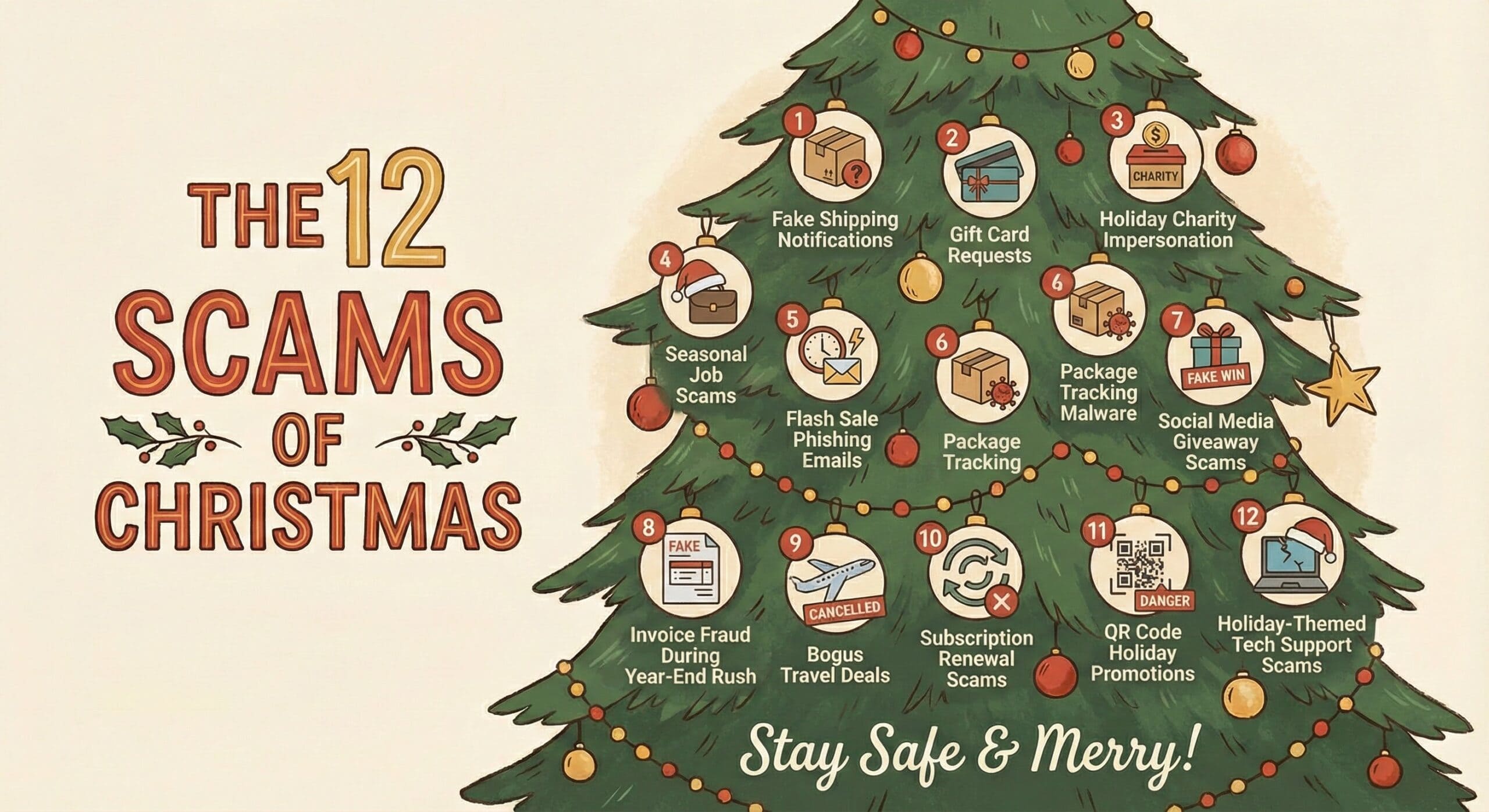 Cybercriminals count on year-end urgency, travel, and increased spending to exploit both individuals and businesses. The result is higher fraud, credential theft, and compromised accounts during the holidays. This guide highlights the most common seasonal scams and what leaders can do to help teams stay vigilant.
12 Scams to Watch This Season
- Fake Shipping Notifications
Texts or emails claiming a missed delivery, often mimicking UPS, USPS, or FedEx, that lead to credential-harvesting sites. - Gift Card Requests
Attackers impersonate executives and ask employees to purchase gift cards “for clients” or “emergencies.” - Holiday Charity Impersonation
Fraudulent donation websites or messages pretending to be legitimate nonprofits. - Seasonal Job Scams
Fake remote job postings designed to steal personal data or request upfront payments. - Flash Sale Phishing Emails
“One-day-only” or “exclusive discount” emails that redirect to malware-infected pages. - Package Tracking Malware
Downloadable “tracking documents” that install keyloggers or remote-access tools. - Social Media Giveaway Scams
Fake accounts running “holiday giveaways” that request personal information or payment. - Invoice Fraud During Year-End Rush
Attackers submit realistic-looking invoices when AP and finance teams are busiest. - Bogus Travel Deals
Fraudulent booking sites offering deep discounts for business or personal travel. - Subscription Renewal Scams
Fake notices for antivirus or software renewals demanding immediate payment. - QR Code Holiday Promotions
Tampered codes on flyers, cards, or displays that redirect to malicious sites instead of legitimate offers. - Holiday-Themed Tech Support Scams
Pop-ups or calls claiming an urgent issue that “must be fixed before year-end,” pushing users to grant remote access or pay fake support fees.
Why These Scams Spike in Q4
The end of the year compresses activity across finance, HR, and customer service. Employee workloads peak, inboxes overflow, and decision cycles accelerate—all creating the conditions attackers exploit. Seasonal promotions and travel also blur the line between personal and business communications, increasing click-through risk.
For small and mid-sized companies, this can mean downtime, financial loss, or compliance exposure at exactly the wrong time of year. A single successful scam can interrupt operations, impact cash flow, and erode customer trust.
What Businesses Should Do
- Reinforce security training. Send a quick refresher highlighting these 12 scams and how to spot them.
- Require verification for financial requests. Use secondary approval checks for gift cards, wire transfers, and vendor banking changes.
- Tighten email filtering and MFA enforcement. Reduce the likelihood of successful credential theft across email, cloud apps, and remote access.
- Encourage skepticism of unsolicited messages. Teach teams to inspect URLs, sender addresses, attachments, and urgency cues before clicking.
- Review incident response plans. Confirm contacts, roles, and communication steps are current before holiday absences and reduced staffing.
Why This Matters for Business Leaders
Late-year outages or fraud incidents can halt operations, delay revenue, and strain customer relationships. Reducing seasonal scam risk directly supports uptime, protects sensitive data, and helps maintain compliance obligations.
For many organizations, Q4 is the most important sales and reporting period of the year. A small amount of prevention now—training, verification steps, and basic security controls—can avert significant disruption when teams are operating with holiday schedules and reduced coverage.
Next Steps
If your organization would benefit from a seasonal security review or a quick readiness assessment, the OSPC team can help you prepare for year-end risks and reinforce your internal safeguards. A focused checkup now can help keep your business running smoothly through the holidays and into the new year.
Holiday Scam Mini-FAQ
Are holiday scams more common for businesses or individuals?
Both are heavily targeted, but businesses often face higher financial exposure and operational interruptions from phishing, invoice fraud, and account compromise. Attackers know that business email accounts and payment processes can lead to larger payouts.
What’s the fastest way to reduce risk today?
Require multi-factor authentication (MFA) across all key accounts and remind employees to verify any request involving money, credentials, or tight deadlines. These two steps stop a large percentage of common scams.
Should teams report suspicious holiday emails even if they’re not sure?
Yes. Early reporting allows IT to isolate threats before they spread and helps protect the entire organization. It is always better to ask a quick question than to click on a risky link.